How to Fix Uneven or Sagging Docks: A Tampa Dock Owner’s Guide
What every Tampa dock owner should know about uneven or sagging dock repairs
If you own a dock in Tampa, Florida, you know it’s more than just a place to tie up your boat. It’s where you watch sunsets over the bay, cast a line, or simply relax with friends and family. But a sagging or uneven dock can turn those peaceful moments into stress—and even a safety hazard.
Luckily, fixing an uneven dock doesn’t have to be overwhelming. Understanding the causes, identifying the warning signs, and knowing your repair options can keep your dock safe and enjoyable for years to come.
Why Docks Sag in Tampa (It’s Not Just “Old Age”)
Docks in Tampa Bay deal with conditions that most inland structures never face. Water moves. Soil shifts. Salt creeps into everything.
Here’s what usually causes the problem:
- Soft, Sandy Soil - Much of the shoreline around Tampa sits on sand or silt. That ground can compact over time. When it does, pilings settle unevenly. One corner sinks a little. Then another. Before long, your once-level dock slopes toward the water.
- Storms and Tidal Swings - Florida weather doesn’t play around. Heavy rains, tropical systems, and seasonal high tides push and pull at your dock’s structure. Over time, that stress loosens fasteners and weakens supports.
- Everyday Wear - It’s easy to overlook the slow damage. Boats bump the frame. People gather in one area. Gear gets dragged across boards. Each impact seems minor. Add them up over years, and things start to shift.
- Salt and Moisture - Humidity lingers. Saltwater seeps into wood and metal. Rust forms. Rot spreads. Even pressure-treated lumber eventually gives in without proper care.
The moment you understand these forces, you stop second-guessing. You start fixing the right problem.
Subtle Signs Your Dock Is Asking for Help
The signs often speak in whispers before demanding attention.
Look for:
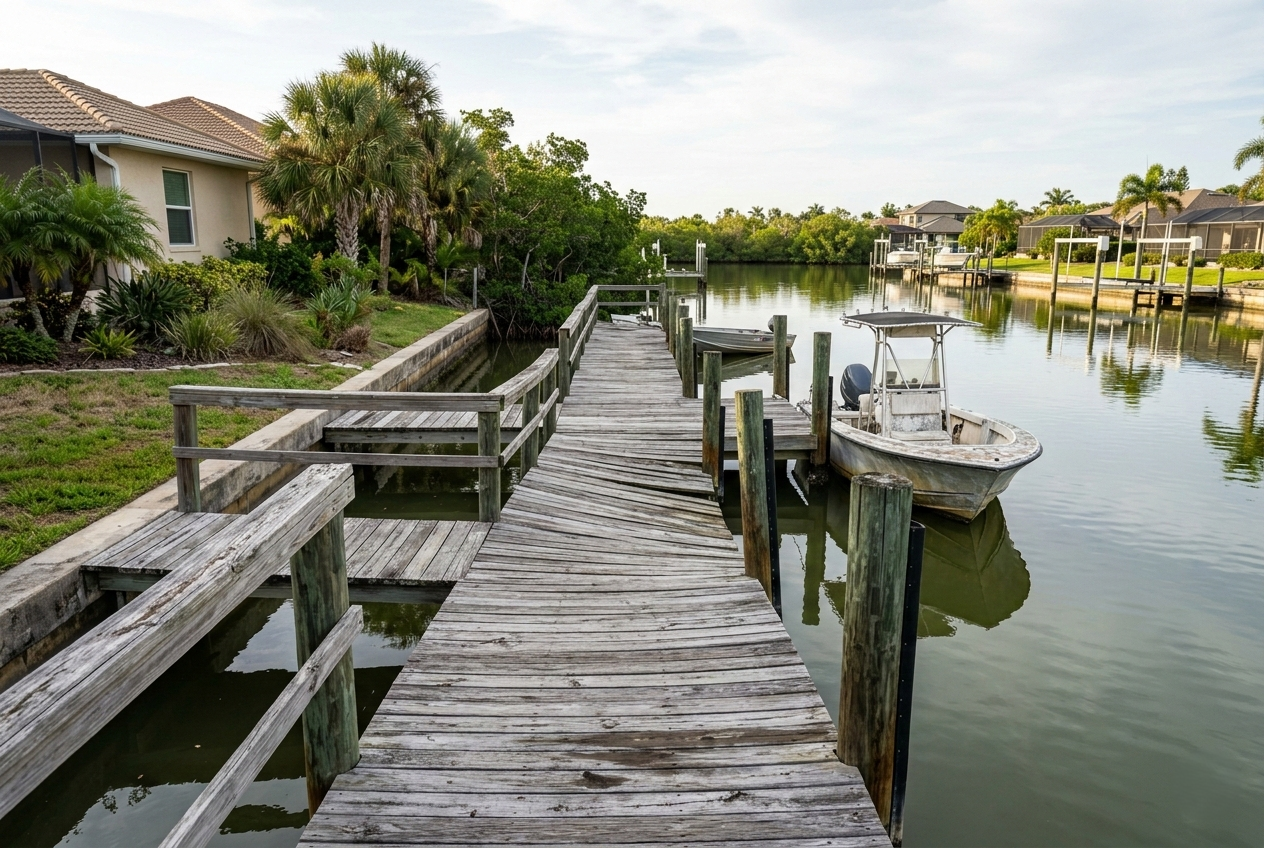
- Boards that slope toward the water
- Planks that wobble underfoot
- Loose railings
- Gaps where boards used to sit tight
- Water pooling after rain
If something feels unstable, trust that instinct. Docks rarely fix themselves.
Check the Foundation
Before making surface repairs, inspect the underlying structure. Inspect pilings for any leaning, sagging, or visible signs of rot and rust. Even if your decking looks solid, a weak foundation can lead to bigger problems later. Addressing the base ensures any repairs you make will last.
How to Fix Uneven or Sagging Docks
Here’s a practical roadmap for getting your dock back in shape:
1. Repair or Replace Decking Boards
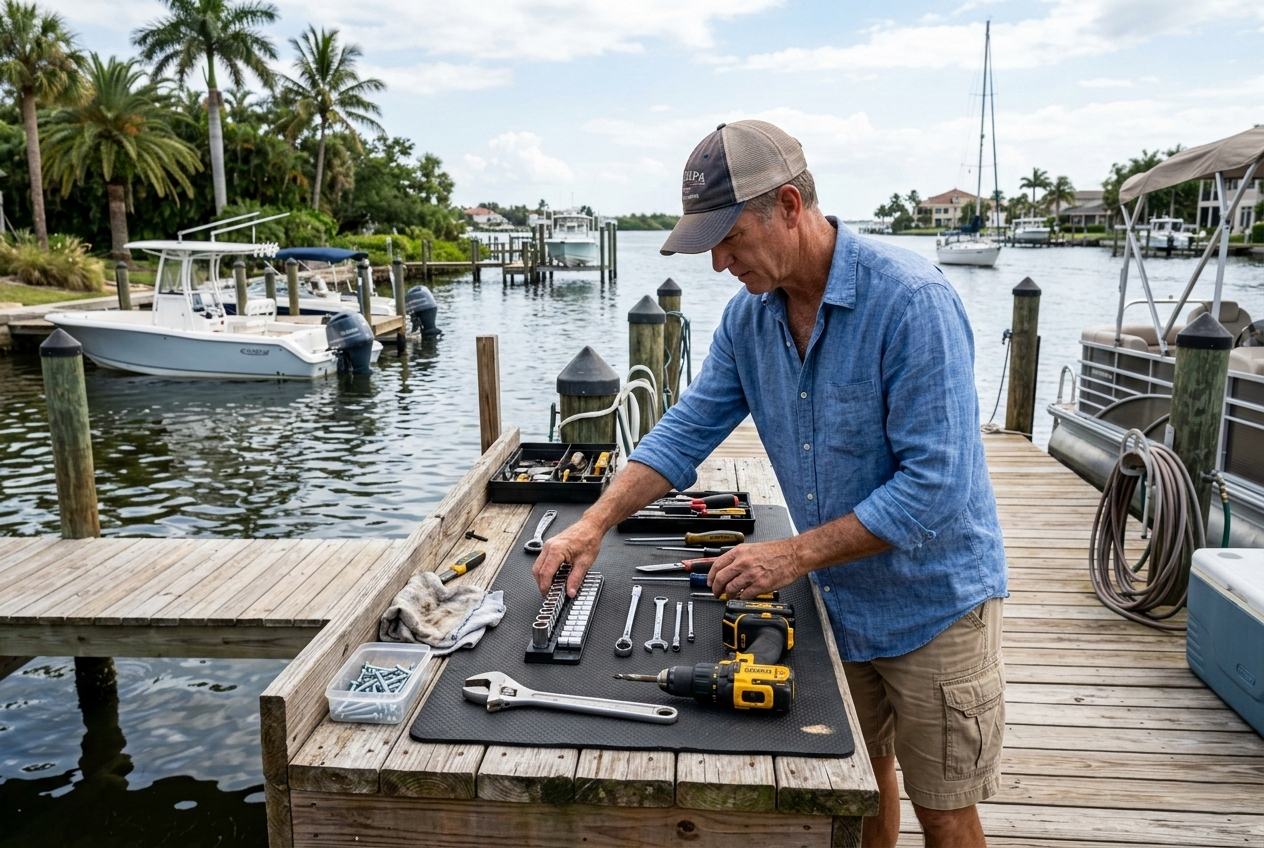
Start at the surface. Fix warped, fractured, or failing boards, and tighten all screws and bolts that aren’t snug. Using marine-grade hardware can prevent rust and extend the life of your repairs. A solid, level deck is essential for both safety and enjoyment.
2. Reset or Replace Pilings
If your dock continues to sag, the issue often lies below the surface. Pilings may need to be reset deeper into stable soil or replaced entirely if they are damaged. Properly aligned pilings provide a stable foundation, which is critical for keeping your dock level long-term.
3. Strengthen the Structure
Sometimes boards and pilings aren’t enough. Adding cross beams or braces, using adjustable supports for weak spots, and replacing damaged frame elements can reinforce your dock. A sturdy structure reduces sagging and makes your dock more resilient to storms and heavy use.
4. Factor in Local Conditions
Tampa’s waterways can be unpredictable. High tides, storm surges, and erosion near the shoreline can impact your dock over time. Protect your dock by using materials that withstand saltwater and moisture, and consider small adjustments like raising sections above seasonal high water levels.
5. Prioritize Ongoing Maintenance
Consistent care over time pays off in the long run. Inspect your dock at least twice annually, tighten loose hardware, remove algae and debris, and seal or stain wood decking to prevent rot. Consistent maintenance helps avoid bigger, costlier repairs later.
6. Know When to Call Professionals
Some maintenance tasks require expert hands, not just home tools. If multiple areas are sagging, pilings are severely damaged, or you’re unsure how to proceed safely, it’s wise to call in the experts. Professionals can handle structural repairs efficiently and ensure your dock is safe and long-lasting.
Keep Your Tampa Dock Safe and Level
No one wants a dock that sags—and more importantly, it’s dangerous for family and friends. By taking action early, reinforcing the foundation, and staying on top of maintenance, you can enjoy your waterfront property without worry.
If you want professional help right here in Tampa,
contact Tampa Dock Builders. Their local experience with Tampa Bay conditions and dock construction ensures your dock will be safe, level, and ready for many years of use.
You might also like
Tampa Dock Blog